

February 28th, 2026
Stepping Into the Edge and Discovering the Thirst
When I first wrote about stepping into the edge before the unconference, I was anticipating the excitement, the unknown, and the discomfort. Now, I’ve stepped through the threshold.
Through Leadership Lab, I have witnessed myself shifting from documentarian to facilitator. For years I have been comfortable behind the lens, shaping narrative through framing and editing. Holding a room is different. There is no post-production. The energy responds in real time. One feels every hesitation, every silence, and every moment when something deeper wants to surface.
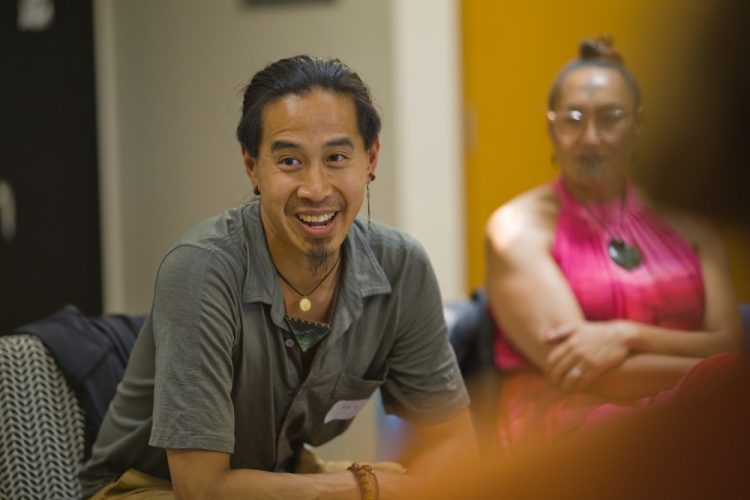
My unconference session was called Weaving the Human Story Back to the Living World. I chose not to begin with theory or policy. We began with breath, then with a question that felt simple, maybe even humorous, and also pensive: If you were a tree, a plant, a fungi, an insect, or an animal, what would you be? What qualities do you carry?
Moss. Harakeke. A loyal dog. A bird. Moko kauae. Pride. Silliness. Patience. Intergenerational healing.
Identity entered through ecology rather than ideology. Instead of debating equity frameworks, we were exploring who we are in relation to the living world. That shift softened defensiveness and made space for story. One participant spoke about her mother being forced to assimilate, to suppress language and culture, and about her own decision to reclaim moko kauae (female moko). She spoke of wanting her daughter to grow up without inherited shame. That moment held grief and reclamation at once. Another participant named the tension between pride and playfulness, between wanting to be seen and remaining small, to not poke out like a tall poppy. Someone else described themselves as moss, slow and steady, overlooked but essential.
Storytelling to others is a way to reinterpret our own story. I watched that reinterpretation unfold in real time. People were not just describing themselves; they were updating their narrative in the presence of witnesses. Participation was a two-way street.
I also felt my own edge. In the past, my internal patterning might have been rooted in a fear of debate or being torn down. Holding this edge required a different kind of diligence: a calm presence and the mindfulness to know that these people had chosen to enter this space to learn and share, not to conflict. I practiced breathing through what my mind deemed to be uncomfortable silence, leaning on my personal history of spaceholding and deep group work to stay anchored. By practicing non-judgment and using non-verbal acknowledgement, I learned to let the dust settle. I realised that even in the quiet, the cogs are turning. There is no need to pile on more words or prompts.
Afterward, a participant shared that our session could easily have been a couple hours long, or even a full wānanga. That comment landed deeply and warmed my heart.
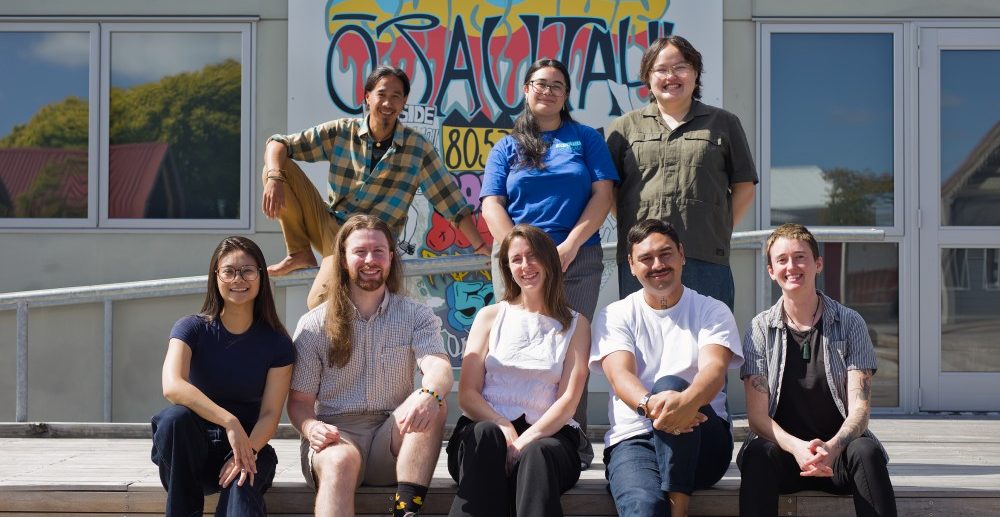
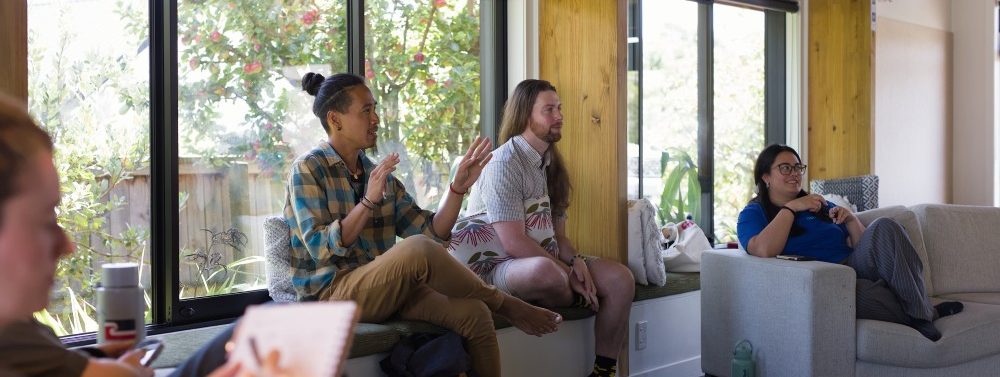
This invitation did not happen in isolation. Over the past several months I have been part of Leadership Lab’s Te Whāriki internship experience. Our cohort spans sectors and identities. We have practiced deep listening before practicing speaking. We have explored our top strengths through CliftonStrengths and engaged with te ao Māori frameworks that invite relational accountability rather than individual performance.
Te Whāriki has required both inner inquiry and outward relationship building. It has asked us to name our strengths, claim our stakes in the ground, and value partnerships that respect differences. This programme gave me the container to bring my internal practices into a collective space. That balance between internal reckoning and collective responsibility shaped how I approached this session. We are not fixed products of our upbringing. Life is part of an ecosystem. Everything in nature changes, and so do we. Every experience, every emotion, and every conversation contributes to who we are becoming.
After the unconference, I spent two nights alone in the mountains and forest of Kā Tiritiri o te Moana (Southern Alps). Among trees that regenerate after storms and fallen trunks that create light for seedlings, I recognised something clearly. Nature and spaciousness allowed me to let the experience settle and other incessant background processes to take rest. The discomfort of stepping into facilitation was temporary. The realisation on the other side was enduring. There is a thirst for this work.
People are not tired of depth. They are tired of performing. There is willingness, even among those who feel uncertain, to lean into the grief of disconnection from whenua, from whakapapa, from the self, and one another. When someone opens a door and holds it with genuine care, others will walk through.
This session felt like crossing a threshold I have been standing at for over two years. It was a self-test as much as a service to the collective. I discovered that I enjoy convening meaning. I enjoy holding the tension long enough for something honest to emerge, with myself as well as for others. There is real gold in there to be discovered.
As the Lunar New Year brings us into the Year of the Horse, I feel a new sense of momentum and strength. This is a time for finding my stride and trusting the steady pace of the mahi ahead. This feels less like a one-off experiment and more like an initiation that requires continued practice and repetition to fine-tune. Sometimes the path forward is walked alone in the forest. Sometimes it is held in a room of peers willing to explore who they are and who they might become. Either way, the edge is no longer abstract. I have stepped through it, and I intend to keep going. Ngā mihi nui Leadership Lab and all of the participants for shared kōrero, kai, and insights with our interwoven paths ahead.
—
This reflection piece was written by Leaders For Equity Unconference 2025 contributor and Te Whāriki participant, Kai J. Lee – Subtledream Productions.
February 28th, 2026
Stepping Into the Edge and Discovering the Thirst
When I first wrote about stepping into the edge before the unconference, I was anticipating the excitement, the unknown, and the discomfort. Now, I’ve stepped through the threshold.
Through Leadership Lab, I have witnessed myself shifting from documentarian to facilitator. For years I have been comfortable behind the lens, shaping narrative through framing and editing. Holding a room is different. There is no post-production. The energy responds in real time. One feels every hesitation, every silence, and every moment when something deeper wants to surface.
My unconference session was called Weaving the Human Story Back to the Living World. I chose not to begin with theory or policy. We began with breath, then with a question that felt simple, maybe even humorous, and also pensive: If you were a tree, a plant, a fungi, an insect, or an animal, what would you be? What qualities do you carry?
Moss. Harakeke. A loyal dog. A bird. Moko kauae. Pride. Silliness. Patience. Intergenerational healing.
Identity entered through ecology rather than ideology. Instead of debating equity frameworks, we were exploring who we are in relation to the living world. That shift softened defensiveness and made space for story. One participant spoke about her mother being forced to assimilate, to suppress language and culture, and about her own decision to reclaim moko kauae (female moko). She spoke of wanting her daughter to grow up without inherited shame. That moment held grief and reclamation at once. Another participant named the tension between pride and playfulness, between wanting to be seen and remaining small, to not poke out like a tall poppy. Someone else described themselves as moss, slow and steady, overlooked but essential.
Storytelling to others is a way to reinterpret our own story. I watched that reinterpretation unfold in real time. People were not just describing themselves; they were updating their narrative in the presence of witnesses. Participation was a two-way street.
I also felt my own edge. In the past, my internal patterning might have been rooted in a fear of debate or being torn down. Holding this edge required a different kind of diligence: a calm presence and the mindfulness to know that these people had chosen to enter this space to learn and share, not to conflict. I practiced breathing through what my mind deemed to be uncomfortable silence, leaning on my personal history of spaceholding and deep group work to stay anchored. By practicing non-judgment and using non-verbal acknowledgement, I learned to let the dust settle. I realised that even in the quiet, the cogs are turning. There is no need to pile on more words or prompts.
Afterward, a participant shared that our session could easily have been a couple hours long, or even a full wānanga. That comment landed deeply and warmed my heart.
This invitation did not happen in isolation. Over the past several months I have been part of Leadership Lab’s Te Whāriki internship experience. Our cohort spans sectors and identities. We have practiced deep listening before practicing speaking. We have explored our top strengths through CliftonStrengths and engaged with te ao Māori frameworks that invite relational accountability rather than individual performance.
Te Whāriki has required both inner inquiry and outward relationship building. It has asked us to name our strengths, claim our stakes in the ground, and value partnerships that respect differences. This programme gave me the container to bring my internal practices into a collective space. That balance between internal reckoning and collective responsibility shaped how I approached this session. We are not fixed products of our upbringing. Life is part of an ecosystem. Everything in nature changes, and so do we. Every experience, every emotion, and every conversation contributes to who we are becoming.
After the unconference, I spent two nights alone in the mountains and forest of Kā Tiritiri o te Moana (Southern Alps). Among trees that regenerate after storms and fallen trunks that create light for seedlings, I recognised something clearly. Nature and spaciousness allowed me to let the experience settle and other incessant background processes to take rest. The discomfort of stepping into facilitation was temporary. The realisation on the other side was enduring. There is a thirst for this work.
People are not tired of depth. They are tired of performing. There is willingness, even among those who feel uncertain, to lean into the grief of disconnection from whenua, from whakapapa, from the self, and one another. When someone opens a door and holds it with genuine care, others will walk through.
This session felt like crossing a threshold I have been standing at for over two years. It was a self-test as much as a service to the collective. I discovered that I enjoy convening meaning. I enjoy holding the tension long enough for something honest to emerge, with myself as well as for others. There is real gold in there to be discovered.
As the Lunar New Year brings us into the Year of the Horse, I feel a new sense of momentum and strength. This is a time for finding my stride and trusting the steady pace of the mahi ahead. This feels less like a one-off experiment and more like an initiation that requires continued practice and repetition to fine-tune. Sometimes the path forward is walked alone in the forest. Sometimes it is held in a room of peers willing to explore who they are and who they might become. Either way, the edge is no longer abstract. I have stepped through it, and I intend to keep going. Ngā mihi nui Leadership Lab and all of the participants for shared kōrero, kai, and insights with our interwoven paths ahead.
—
This reflection piece was written by Leaders For Equity Unconference 2025 contributor and Te Whāriki participant, Kai J. Lee – Subtledream Productions.