

Authors
September 30th, 2026
Aligned by Design
I wanted to create a space where individuals would be seen as full humans, where I could work holistically with them, and where I could practice fully under the Youth Work Code of Ethics and best practice guidelines for working with trans and gender diverse folks. So I started The Affirm Room: peer support for trans or neurodiverse individuals.
Everyone who is self-employed or launches their own business has a story about how they got there. Many of these stories will be similar, yet completely diverse in their own ways. Today, I’m sharing a portion of my story:
I have always felt lucky about how my career started, ‘falling into’ mahi that felt natural to me, gave me purpose, and which I enjoyed: youth work. Yet, 20 years into my career, the move into private practice and my struggle to answer the classic Pākehā question, “what do you do?” has required a massive identity shift that has been uncomfortable and, at times, messy.
Self-employment started as casual mahi. I was working full-time as Transgender Peer Support at a local youth work organisation, and was asked to join the Leadership Lab youth programme Puāwai as Tuakana Rainbow. The programme was about developing rangatahi as leaders with an intersectional kaupapa, and I was in. Everyone who came on board was hired as a contractor and given guidance on invoicing and accounting software.
Redundancy was where the bigger shift came. I was still injured from surgery, waiting for reconstruction, and also facing two other minor surgeries in the following year. I didn’t feel employable. I was also battling with an ongoing struggle of values misalignment with organisations that I had worked for. I had observed that no matter how well-intentioned policies or decisions were, the impact fell short – often for those who were already marginalised, and my AuDHD brain struggled with it.
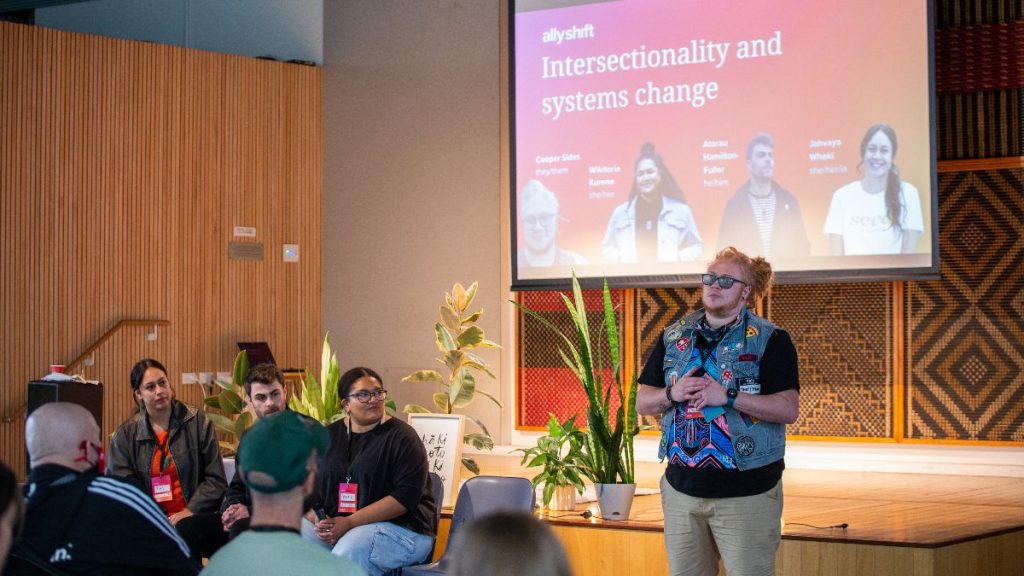
I concluded that I needed to create my own business, where I was solely responsible for implementing the values that I aligned with: anti-racist, responsive to accessibility and centering queer and neurodiverse identities This is where the process of starting my own business started.
I really enjoyed working with people who were on their gender journey. I noticed a massive overlap with neurodivergence, and felt the need to acknowledge this. I noticed that most funded peer support programmes were brief-intervention, and to make this funding structure fit, support with things such as accommodation was referred to organisations funded for that particular support. This makes sense at face value, but I felt it missed two vital factors:
1. Not all services are safe for those of us whose gender does not fit the standard mould.
2. For a significant portion of trans and non-binary folks, our ability to access accommodation is inherently impacted by our gender identity.
I also recognised that for many who were referred for Trans Peer Support, 1-6 sessions would suffice; there was a significant number who communicated a need for more ongoing support. Factors included higher support needs due to neurodivergence, having whānau who struggled to understand, schools who didn’t respect their identity, or a mistrust of other professional supports (due to negative experiences).
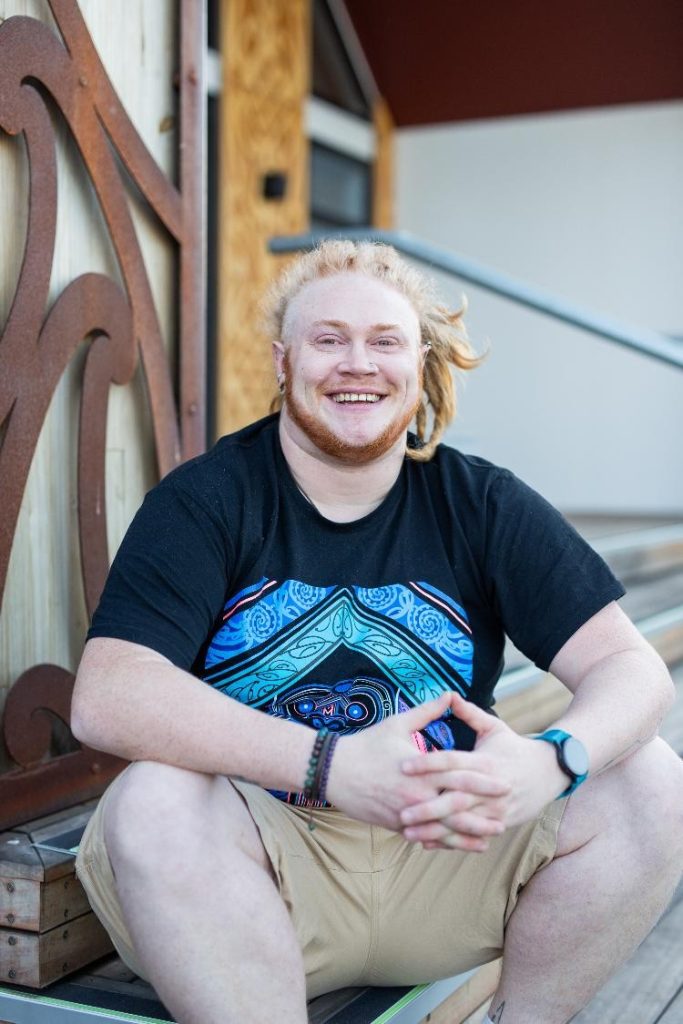
There have been struggles starting this business. The largest barrier for me to overcome has been the fact that I had spent my career in spaces where the support I provided was free. I battled with feelings of guilt having to ask people to pay for my time, and spent sessions with my supervisor helping me to deconstruct and process my thoughts around this. At times my AuDHD got in the way: creating a website myself, I got stuck aiming at perfection, starting and giving up on three different websites, before realising that if I ever wanted it to happen I needed to do something simple that was “good enough”.
My most recent supervision session was around unpacking the difficulties around my professional identity. We realised that I only considered client-facing time to be “real mahi.” The biggest learning curve for me was realising I was treating finances, communications, strategic development, and marketing as things I had to do to get to the mahi. When in reality, it is a fundamental part of the mahi which I had delegitimised and therefore struggled to prioritise it properly.
So I’ll leave this story by recognising that I haven’t perfected how to be a business owner yet. I’m both nervous and excited about my next learning adventure: recognising and giving space to all the mahi required to have my own business, and fully recognising that it is all important because without it, I wouldn’t even have the opportunity to do what I love: working with people to live safe, happy, thriving lives.
This reflection piece was written by Cooper Sides – Cooper Sides (they/them) – Te Whāriki alumni and Community of Practice Committee Member, The Affirm Room Director and Leadership Lab consultant
September 30th, 2026
Aligned by Design
I wanted to create a space where individuals would be seen as full humans, where I could work holistically with them, and where I could practice fully under the Youth Work Code of Ethics and best practice guidelines for working with trans and gender diverse folks. So I started The Affirm Room: peer support for trans or neurodiverse individuals.
Everyone who is self-employed or launches their own business has a story about how they got there. Many of these stories will be similar, yet completely diverse in their own ways. Today, I’m sharing a portion of my story:
I have always felt lucky about how my career started, ‘falling into’ mahi that felt natural to me, gave me purpose, and which I enjoyed: youth work. Yet, 20 years into my career, the move into private practice and my struggle to answer the classic Pākehā question, “what do you do?” has required a massive identity shift that has been uncomfortable and, at times, messy.
Self-employment started as casual mahi. I was working full-time as Transgender Peer Support at a local youth work organisation, and was asked to join the Leadership Lab youth programme Puāwai as Tuakana Rainbow. The programme was about developing rangatahi as leaders with an intersectional kaupapa, and I was in. Everyone who came on board was hired as a contractor and given guidance on invoicing and accounting software.
Redundancy was where the bigger shift came. I was still injured from surgery, waiting for reconstruction, and also facing two other minor surgeries in the following year. I didn’t feel employable. I was also battling with an ongoing struggle of values misalignment with organisations that I had worked for. I had observed that no matter how well-intentioned policies or decisions were, the impact fell short – often for those who were already marginalised, and my AuDHD brain struggled with it.
I concluded that I needed to create my own business, where I was solely responsible for implementing the values that I aligned with: anti-racist, responsive to accessibility and centering queer and neurodiverse identities This is where the process of starting my own business started.
I really enjoyed working with people who were on their gender journey. I noticed a massive overlap with neurodivergence, and felt the need to acknowledge this. I noticed that most funded peer support programmes were brief-intervention, and to make this funding structure fit, support with things such as accommodation was referred to organisations funded for that particular support. This makes sense at face value, but I felt it missed two vital factors:
1. Not all services are safe for those of us whose gender does not fit the standard mould.
2. For a significant portion of trans and non-binary folks, our ability to access accommodation is inherently impacted by our gender identity.
I also recognised that for many who were referred for Trans Peer Support, 1-6 sessions would suffice; there was a significant number who communicated a need for more ongoing support. Factors included higher support needs due to neurodivergence, having whānau who struggled to understand, schools who didn’t respect their identity, or a mistrust of other professional supports (due to negative experiences).
There have been struggles starting this business. The largest barrier for me to overcome has been the fact that I had spent my career in spaces where the support I provided was free. I battled with feelings of guilt having to ask people to pay for my time, and spent sessions with my supervisor helping me to deconstruct and process my thoughts around this. At times my AuDHD got in the way: creating a website myself, I got stuck aiming at perfection, starting and giving up on three different websites, before realising that if I ever wanted it to happen I needed to do something simple that was “good enough”.
My most recent supervision session was around unpacking the difficulties around my professional identity. We realised that I only considered client-facing time to be “real mahi.” The biggest learning curve for me was realising I was treating finances, communications, strategic development, and marketing as things I had to do to get to the mahi. When in reality, it is a fundamental part of the mahi which I had delegitimised and therefore struggled to prioritise it properly.
So I’ll leave this story by recognising that I haven’t perfected how to be a business owner yet. I’m both nervous and excited about my next learning adventure: recognising and giving space to all the mahi required to have my own business, and fully recognising that it is all important because without it, I wouldn’t even have the opportunity to do what I love: working with people to live safe, happy, thriving lives.
This reflection piece was written by Cooper Sides – Cooper Sides (they/them) – Te Whāriki alumni and Community of Practice Committee Member, The Affirm Room Director and Leadership Lab consultant
Authors