

July 30th, 2026
What does belonging look like when no one culture is the default?
Aotearoa is becoming one of the most diverse countries in the world. We often celebrate this fact, and rightly so. Diversity brings new perspectives, experiences, languages and ways of understanding the world.
Yet diversity also invites us into a deeper conversation.
If our communities are becoming increasingly diverse, what does this mean for how we relate to one another? How do we build trust across differences? And what does belonging look like in a society where no one culture can be considered the default?
For generations, many societies have been organised around an invisible centre: there has been a dominant language, a dominant set of cultural norms, a dominant understanding of what it means to belong. Diversity existed, but often at the margins.
Today, that reality is changing. Increasingly, people are growing up with multiple cultural influences, multiple identities, and multiple ways of making sense of the world. Communities are becoming more interconnected and, at the same time, more complex. Yet many of our assumptions about belonging remain rooted in a time when cultural diversity was seen as the exception rather than the norm. This raises an important question:
If no one culture is the default, what happens to our understanding of belonging?
Historically, belonging has often been linked to ideas of fitting in. Newcomers were expected to integrate. Minority groups were encouraged to adapt. Success was frequently measured by how closely people could navigate existing cultural expectations.
But what if belonging is not about fitting into a pre-existing centre? What if the centre itself is changing?
Perhaps one of the greatest challenges facing diverse societies is that we continue trying to solve twenty-first century realities with twentieth-century assumptions. We often talk about inclusion, but inclusion still implies that someone is being included into something that already exists. The language itself reveals an underlying power dynamic:
- Who is doing the including?
- Who defines the norms?
- Who gets to decide what participation looks like?
As diversity increases, these questions become harder to ignore. Because diversity is not simply adding more cultures into an existing social structure. Over time, diversity changes the structure itself. It changes who holds knowledge; whose stories are visible; what leadership looks like. It changes how communities imagine their future.
For many migrants, these questions are deeply personal. Migration is not simply the movement of people across borders. It is often a journey of identity. Many arrive carrying multiple versions of themselves. Some traditions become stronger. Some become less important. New influences emerge. New relationships reshape old understandings. Identity becomes less about preserving something unchanged and more about navigating a continuous process of becoming.
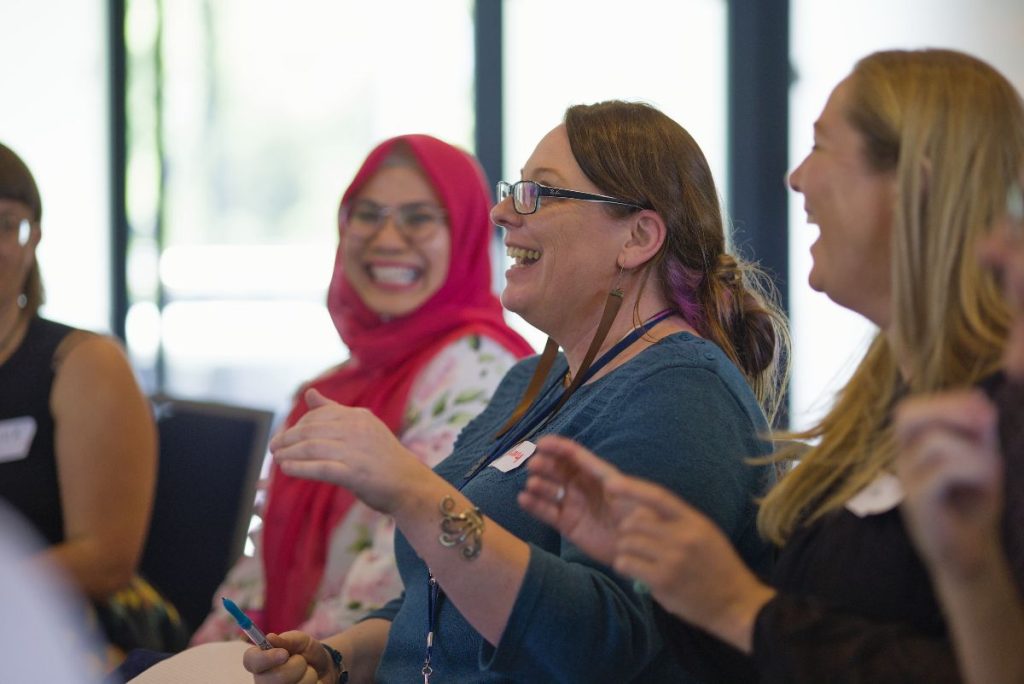
I was reminded of this while reflecting on an invitation to wear “traditional dress” at an ethnic women’s leadership gathering. What initially appeared to be a simple request quickly became a more complicated question. As an Italian with family roots in different regions, influenced by experiences across countries and cultures, what exactly was my traditional dress? The answer I eventually arrived at said less about nationality and more about connection: a traditional Chinese shirt, Nepalese earrings, a Fijian bag, a pounamu bracelet. All worn on an Italian body.
Each item represented a relationship, a story, an encounter. Together they reflected something that increasingly characterises life in diverse societies: identity is no longer a fixed destination. It is an evolving conversation.
Perhaps multiculturalism should be understood in a similar way. For many years, multiculturalism has often been interpreted as different cultures coexisting alongside one another. While this remains important, coexistence alone may no longer be enough. The challenge before us is not simply how cultures maintain themselves. The challenge is how cultures interact, influence one another, and collectively shape the places we share.
- How do we build trust across differences?
- How do we create shared experiences without demanding sameness?
- How do we strengthen cultural identity while also building collective belonging?
These questions sit at the heart of social cohesion. And they matter because the future of our communities will not be defined by diversity alone. Diversity is a demographic reality. Belonging is a social choice.
One emerges naturally through migration, globalisation and demographic change. The other requires intention. It requires communities willing to move beyond cultural silos, institutions willing to examine whose voices are heard and whose are missing and leaders willing to see diversity not as something to manage, but as something capable of reshaping our collective imagination.
The question, then, is not whether Aotearoa will become more diverse. That future is already here. The real question is whether we can imagine new forms of belonging that are equal to that reality. Not belonging based on conformity or assimilation, but belonging based on participation, contribution and shared ownership of our future. Because when no one culture is the default, belonging can no longer be about joining someone else’s story. It becomes about creating a new story together.
This reflection piece was written by Viviana Zanetti, Kaitohutohu Hapori (Community Development Advisor) Multicultural at the Christchurch City Council
July 30th, 2026
What does belonging look like when no one culture is the default?
Aotearoa is becoming one of the most diverse countries in the world. We often celebrate this fact, and rightly so. Diversity brings new perspectives, experiences, languages and ways of understanding the world.
Yet diversity also invites us into a deeper conversation.
If our communities are becoming increasingly diverse, what does this mean for how we relate to one another? How do we build trust across differences? And what does belonging look like in a society where no one culture can be considered the default?
For generations, many societies have been organised around an invisible centre: there has been a dominant language, a dominant set of cultural norms, a dominant understanding of what it means to belong. Diversity existed, but often at the margins.
Today, that reality is changing. Increasingly, people are growing up with multiple cultural influences, multiple identities, and multiple ways of making sense of the world. Communities are becoming more interconnected and, at the same time, more complex. Yet many of our assumptions about belonging remain rooted in a time when cultural diversity was seen as the exception rather than the norm. This raises an important question:
If no one culture is the default, what happens to our understanding of belonging?
Historically, belonging has often been linked to ideas of fitting in. Newcomers were expected to integrate. Minority groups were encouraged to adapt. Success was frequently measured by how closely people could navigate existing cultural expectations.
But what if belonging is not about fitting into a pre-existing centre? What if the centre itself is changing?
Perhaps one of the greatest challenges facing diverse societies is that we continue trying to solve twenty-first century realities with twentieth-century assumptions. We often talk about inclusion, but inclusion still implies that someone is being included into something that already exists. The language itself reveals an underlying power dynamic:
- Who is doing the including?
- Who defines the norms?
- Who gets to decide what participation looks like?
As diversity increases, these questions become harder to ignore. Because diversity is not simply adding more cultures into an existing social structure. Over time, diversity changes the structure itself. It changes who holds knowledge; whose stories are visible; what leadership looks like. It changes how communities imagine their future.
For many migrants, these questions are deeply personal. Migration is not simply the movement of people across borders. It is often a journey of identity. Many arrive carrying multiple versions of themselves. Some traditions become stronger. Some become less important. New influences emerge. New relationships reshape old understandings. Identity becomes less about preserving something unchanged and more about navigating a continuous process of becoming.
I was reminded of this while reflecting on an invitation to wear “traditional dress” at an ethnic women’s leadership gathering. What initially appeared to be a simple request quickly became a more complicated question. As an Italian with family roots in different regions, influenced by experiences across countries and cultures, what exactly was my traditional dress? The answer I eventually arrived at said less about nationality and more about connection: a traditional Chinese shirt, Nepalese earrings, a Fijian bag, a pounamu bracelet. All worn on an Italian body.
Each item represented a relationship, a story, an encounter. Together they reflected something that increasingly characterises life in diverse societies: identity is no longer a fixed destination. It is an evolving conversation.
Perhaps multiculturalism should be understood in a similar way. For many years, multiculturalism has often been interpreted as different cultures coexisting alongside one another. While this remains important, coexistence alone may no longer be enough. The challenge before us is not simply how cultures maintain themselves. The challenge is how cultures interact, influence one another, and collectively shape the places we share.
- How do we build trust across differences?
- How do we create shared experiences without demanding sameness?
- How do we strengthen cultural identity while also building collective belonging?
These questions sit at the heart of social cohesion. And they matter because the future of our communities will not be defined by diversity alone. Diversity is a demographic reality. Belonging is a social choice.
One emerges naturally through migration, globalisation and demographic change. The other requires intention. It requires communities willing to move beyond cultural silos, institutions willing to examine whose voices are heard and whose are missing and leaders willing to see diversity not as something to manage, but as something capable of reshaping our collective imagination.
The question, then, is not whether Aotearoa will become more diverse. That future is already here. The real question is whether we can imagine new forms of belonging that are equal to that reality. Not belonging based on conformity or assimilation, but belonging based on participation, contribution and shared ownership of our future. Because when no one culture is the default, belonging can no longer be about joining someone else’s story. It becomes about creating a new story together.
This reflection piece was written by Viviana Zanetti, Kaitohutohu Hapori (Community Development Advisor) Multicultural at the Christchurch City Council